
Chaffee County Criminal Court Records
A criminal court record is the case-level file kept by the court once a prosecutor files charges or a ticket is filed into court. In Chaffee County, that file is handled through Chaffee Combined Court and the Colorado Judicial Branch. The record may include a complaint or information, court minutes, hearing settings, motions, plea entries, disposition, sentence orders, probation terms, bond documents, and a register of action.
District Court handles felony criminal cases after filing or transfer. County Court handles misdemeanors, traffic infractions, felony complaints at the preliminary stage, protection orders, and some related matters. Municipal court criminal-style records are separate when the case involves a local ordinance or city traffic matter in Salida or Buena Vista. For the narrower arrest-to-charge issue, see Chaffee County arrest records and charges; for custody, use jail channels.
Search Chaffee County Criminal Court Records
Start with the Colorado Judicial Branch Docket Search if the immediate goal is hearing date, court type, case number, party calendar, or attorney calendar. Choose Chaffee County, Chaffee Combined Court, or the 11th Judicial District. Choose District Court for felony matters and County Court for misdemeanors and felony complaints that have not moved to District Court. The docket search does not provide every filed document.
- Open the statewide docket search and set the Chaffee location filter.
- Use CR, M, T, or the known case class when the case number is available.
- Search by defendant name, business name if relevant, attorney name, or attorney bar number.
- Review hearing settings and case context, then confirm the court level.
- Request the complaint, information, disposition, sentence order, ticket, or ROA through the court record/document request form.
For a statewide criminal-history check, the research points to the Colorado Bureau of Investigation records and background checks page and the official Internet Criminal History Check portal. CBI is not the same as the Chaffee court file. CBI reports are name-based statewide criminal-history products and exclude some categories, including juvenile arrests from public ICHC results.
The assigned image from the CBI records and background checks page shows the state-level criminal history access point.
CBI can help with statewide history, while Chaffee County criminal court records remain the source for the court case file and orders.
Chaffee County Criminal Case Flow
The criminal court record grows as the case moves. A charge may begin with a complaint, information, or ticket. An arraignment is the hearing where charges are presented and a plea may be entered. Pretrial hearings and motions then create orders and minute entries. A case can end by plea, trial verdict, dismissal, or another disposition. Sentencing creates the order that shows punishment or terms imposed after conviction.
Case flow: Charges Filed › Arraignment › Pretrial and Motions › Plea or Trial › Disposition › Sentencing
| Stage | What Happens |
|---|---|
| Charges filed | The prosecutor or court filing starts the criminal case record with alleged offenses. |
| Arraignment | The defendant receives the charge information and a plea may be entered. |
| Pretrial and motions | The record may show motions, continuances, hearings, orders, and bond or protection-order issues. |
| Plea or trial | The case may resolve by plea or proceed to trial for a verdict. |
| Disposition | The court record shows the outcome of each charge or the case as a whole. |
| Sentencing | The sentence order can show jail, probation, fines, costs, restitution, or other court terms. |
What Chaffee County Criminal Records Show
The court record should not be read as a simple guilty-or-not-guilty label. A Chaffee County criminal court record can show charges that were filed, amended, reduced, dismissed, or resolved by plea. It can also show court dates, bond context, protection orders, minute orders, and sentence details. The court request form specifically lists criminal document categories for complaint or information, disposition or sentence order, protection order, and ticket.
| Field | What It Shows |
|---|---|
| Case number | Filing year, case class, and sequence used to identify the criminal case. |
| Defendant | The named person in the criminal case; date of birth may help identify the right party. |
| Charges | Alleged offenses in the complaint, information, ticket, or later amended filing. |
| Hearings | Arraignment, pretrial, review, trial, sentencing, or other scheduled court events. |
| Plea | The defendant's formal answer to a criminal charge. |
| Disposition | The final outcome of a charge or case, such as guilty, dismissed, or other result shown by the court. |
| Sentence | Terms imposed after conviction, including punishment and court-ordered obligations. |
| ROA | Register of action, a brief case history that may include charges, sentences, and minute orders. |
Chaffee Charges vs Convictions
A charge is an accusation. A conviction is a case outcome after a guilty plea, verdict, or other conviction result. Chaffee County criminal court records can contain both, which means a case file may show allegations that did not result in conviction. That distinction is critical for reading criminal court records, background-check material, and court charge records after arrest.
| Charge | Conviction | |
|---|---|---|
| Meaning | Alleged offense filed in court. | Final guilty outcome by plea, verdict, or qualifying disposition. |
| Where it appears | Complaint, information, ticket, docket, or ROA. | Disposition and sentence documents. |
| Can change | May be amended, reduced, dropped, or dismissed. | May later be affected by appeal, postconviction order, or sealing. |
| Use caution | Does not prove guilt. | Still must be checked against the final court order. |
Read Chaffee Criminal Dispositions
Disposition is the final outcome of a charge or case. In a Chaffee County criminal court record, the disposition and sentence order are often the documents needed to understand what happened. A dismissed charge, a guilty plea, a deferred outcome, or a sentence order can have very different legal effects. When the docket is unclear, request the disposition or sentence order rather than relying on the calendar line.
The assigned image from the CBI Internet Criminal History Check portal shows the statewide name-based search path that may reflect criminal-history outcomes after court reporting.
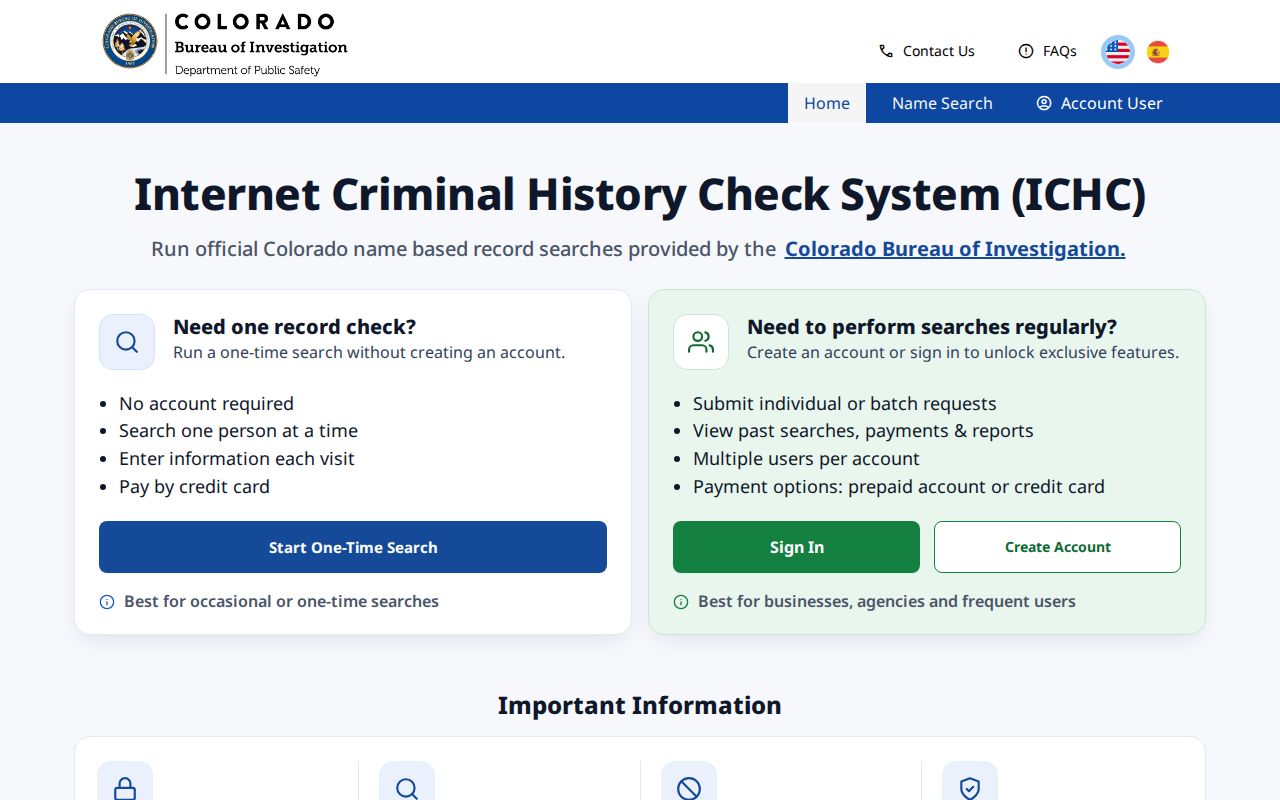
A CBI result can be useful, but the Chaffee court disposition remains the primary court record for the local case outcome.
Sealed vs Expunged Criminal Records
Colorado sealing rules can hide qualifying criminal records from public access. Expungement is different and is often used for certain juvenile or special record categories. The research notes that a person trying to clear a Colorado criminal record should identify whether the matter is an arrest, nonconviction, conviction, juvenile matter, or municipal matter, then obtain the case number and final disposition from the court or CBI.
| Sealed | Expunged | |
|---|---|---|
| Public view | Hidden from ordinary public access by law or court order. | Treated as removed from normal access in qualifying categories. |
| Record holder | Court, CBI, and law enforcement may need the signed order. | Access and effect depend on the specific legal category. |
| Typical proof needed | Case number, final disposition, and signed order. | Case details and statutory eligibility. |
| Chaffee action | Request disposition or ROA from Chaffee Combined Court if needed. | Ask the court or counsel which process applies. |
CBI's FAQ appears in the assigned image from the Internet Criminal History Check FAQ.
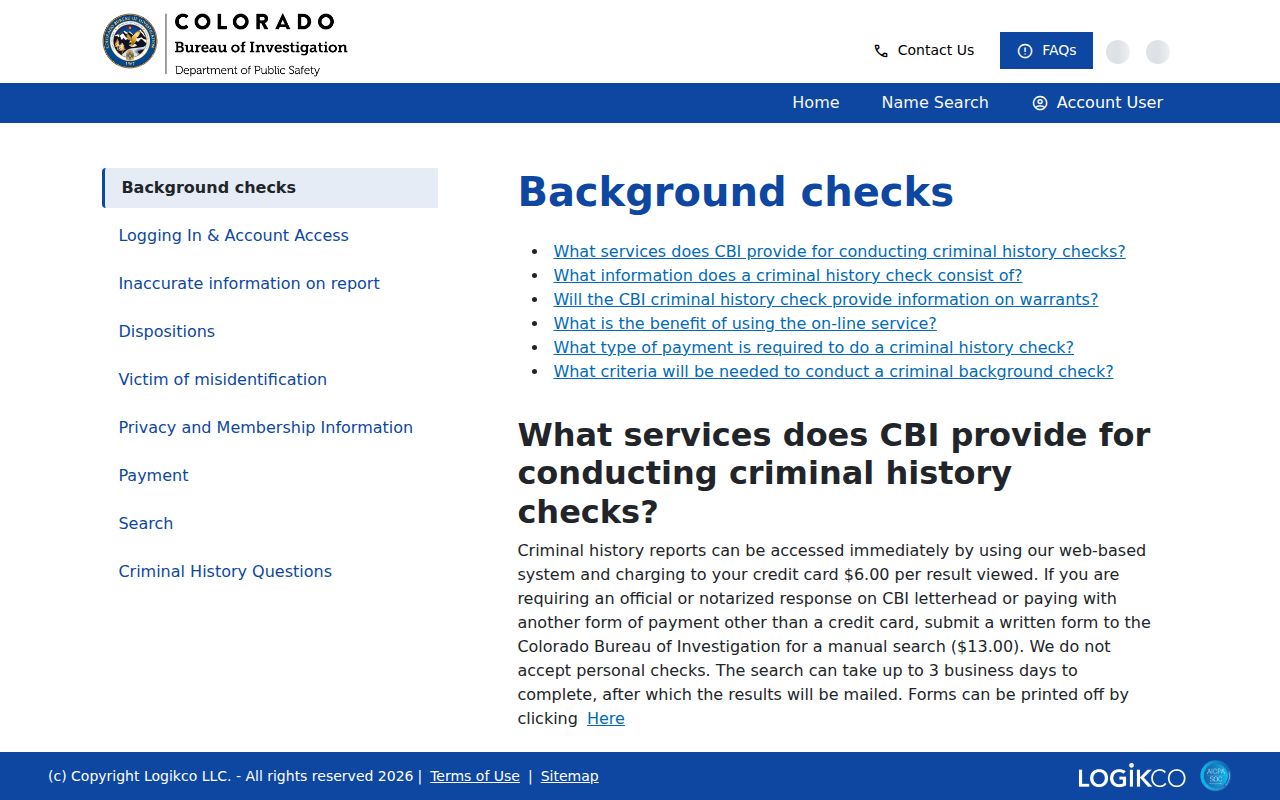
The FAQ is useful for statewide criminal-history searches, while sealing orders and court dispositions must be checked through official court channels.
Public Access to Chaffee Criminal Records
Criminal court records in Chaffee County sit within Colorado's court access framework. The court public records access guide says court-system public records are open at reasonable times subject to CJD 05-01 and P.A.I.R.R. The Colorado Revised Statutes gateway is the official source for statutory rules, including criminal-justice records and sealing provisions cited in the research.
Key access point: Use the court for court files, CBI for statewide criminal history, and sheriff records for law-enforcement reports.
The District Attorney for the 11th Judicial District prosecutes crimes in Chaffee, Custer, Fremont, and Park counties. The research identifies Jeff Lindsey as acting district attorney through a 2024 Judicial Branch press release, and lists prosecution contact paths through district and Chaffee sources. The assigned image from the Colorado Judicial Branch press release provides that district attorney context.
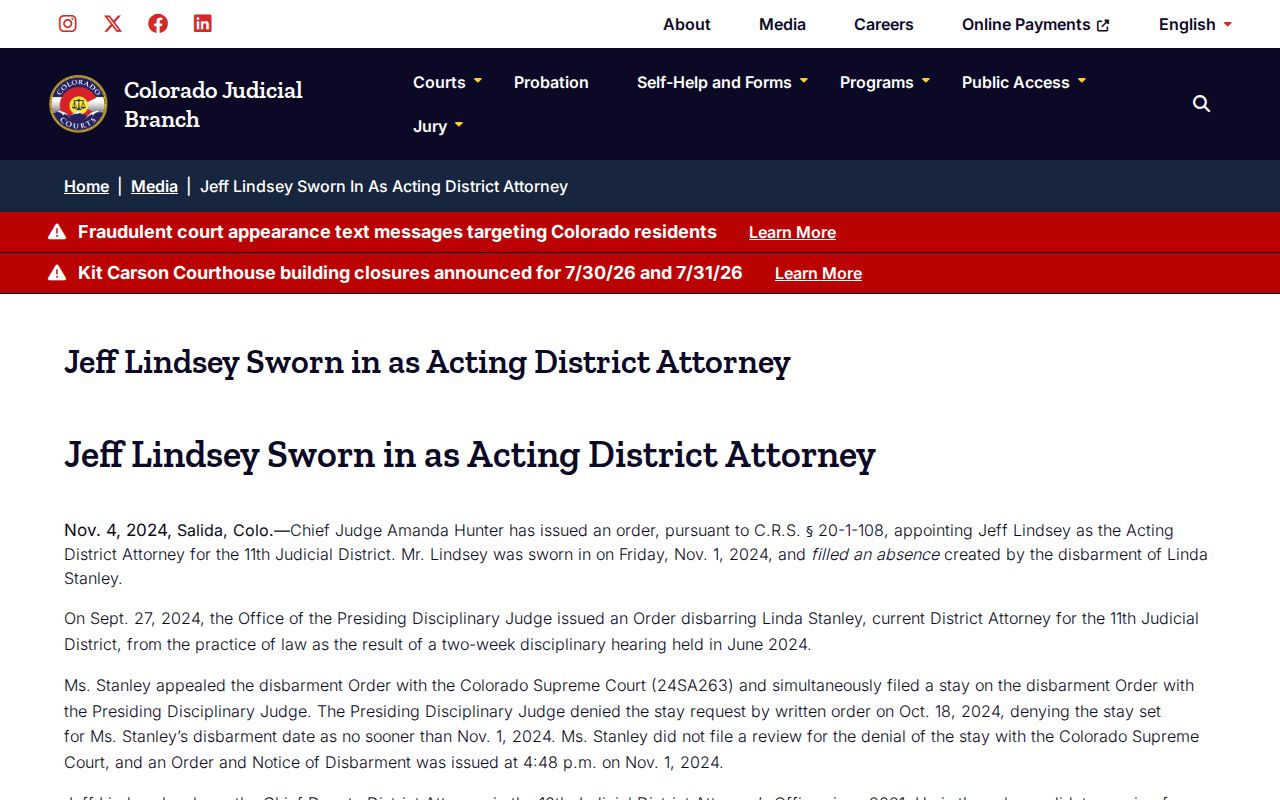
Prosecution context explains who files criminal cases, but filed criminal court records are still requested through the court clerk.
Restricted Chaffee Criminal Court Records
Juvenile criminal matters are restricted, and CBI excludes juvenile arrests from public ICHC results. Sealed or suppressed cases are not ordinary public records. Documents with victim information, protected addresses, minor names, financial data, medical details, or other protected content may be redacted or withheld. The court request form also warns that protected files may require a U.S. government-issued photo ID.
Law-enforcement reports are separate from criminal court records. Chaffee Sheriff's Records Division prepares case files for the district attorney and keeps law-enforcement records, including reports and local criminal-history records, under criminal-justice records rules. A court case may mention law-enforcement facts, but the sheriff's report itself is requested through the sheriff, not the Clerk of Court.
Chaffee County also has a municipal layer. Salida Municipal Court and Buena Vista Municipal Court can handle city ordinance or municipal traffic matters that are not the same as a District Court felony file or County Court misdemeanor file. When a criminal-style matter begins with a municipal citation, the city court clerk or city payment/search path may be the first access channel. When the case is filed by the district attorney in County Court or District Court, Chaffee Combined Court becomes the court-record source.